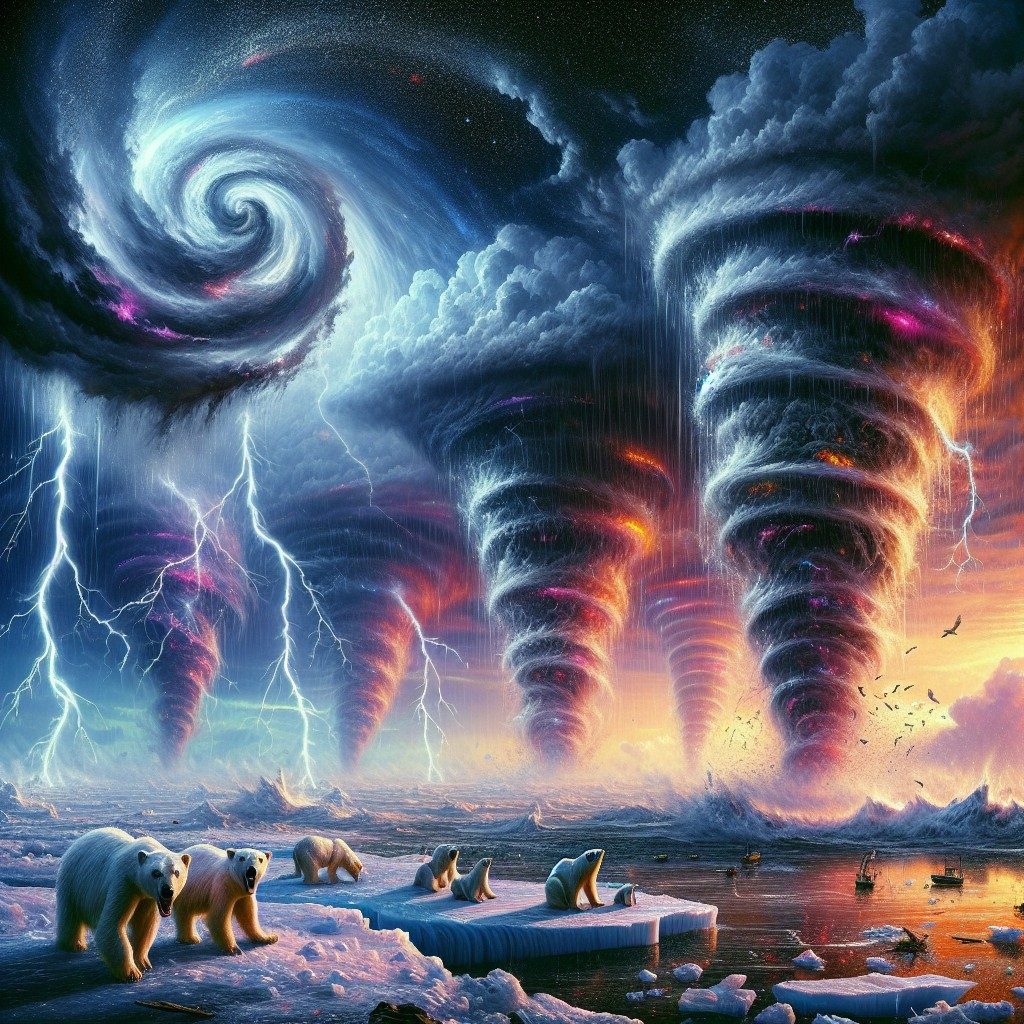
Extreme storms have become an increasingly common and destructive force across the globe, drawing the attention of scientists, policymakers, and the public alike. Understanding these powerful weather events is essential not only for safety but also for improving forecasting methods that can provide earlier warnings and help mitigate the damage. Despite significant progress in meteorology, extreme storms continue to present challenges that occasionally defy prediction.
Defining Extreme Storms
Extreme storms refer to weather systems characterized by intense atmospheric conditions such as heavy rainfall, high winds, and sometimes tornadoes or hail. These events include hurricanes, typhoons, cyclones, blizzards, and severe thunderstorms. The destructive potential of such storms lies in their intensity and unpredictability, often causing flooding, property damage, and loss of life. Precise terminology varies by region, but all share the feature of extreme weather phenomena occurring on a large scale.
Advances in Storm Forecasting Technology
Over the last few decades, forecasting extreme storms has improved markedly due to advancements in satellite technology, radar systems, and computational models. Weather satellites provide real-time data on storm formation and development, allowing meteorologists to track systems from their earliest stages. High-resolution radar helps detect storm intensity and movement with greater accuracy. Advanced computer models simulate atmospheric dynamics and predict storm paths and intensity more reliably than ever before. These technologies together have increased lead times for warnings, enabling more effective preparations.
Challenges That Continue to Impact Accuracy
Despite technological progress, some elements of extreme storms remain difficult to forecast precisely. Storm intensity can fluctuate rapidly due to complex interactions between atmospheric variables and oceanic conditions that models may not fully capture. Local topography also affects storm behavior, sometimes causing unexpected shifts in storm track or strength. Additionally, the chaotic nature of weather systems limits the accuracy of forecasts beyond a certain timeframe, typically around seven to ten days. These factors mean that surprises can and do still occur, sometimes with significant consequences.
Impact of Climate Change on Extreme Storms
Climate change is influencing the characteristics and frequency of extreme storms worldwide. Warmer sea surface temperatures provide more energy to storms, often increasing their intensity and duration. Changes in atmospheric patterns can affect storm tracks and rainfall distribution. Scientific studies indicate that while the total number of extreme storms may not necessarily increase dramatically, the most severe storms are becoming more common. This evolution complicates forecasting efforts, as models need continual updates to incorporate changing baseline conditions driven by climate factors.
Future Directions in Forecasting and Preparedness
Looking ahead, meteorologists and climate scientists continue to enhance forecasting capabilities with the integration of artificial intelligence, bigger data sets, and improved sensor networks. Collaboration among international agencies supports data sharing and unified approaches to storm tracking and response. Public education and emergency management protocols are also evolving to better respond to the warnings that forecasts provide. The goal remains to reduce the human and economic toll of extreme storms, but it will require ongoing investment and adaptation as weather patterns and technological tools evolve.
In conclusion, while forecasting for extreme storms has made impressive strides, the inherent complexity of atmospheric systems means unpredictability persists. Continued advances in technology combined with a deeper understanding of climate impacts are crucial to improving forecast accuracy. Enhancing global cooperation and preparedness will be key to mitigating the risks posed by these powerful natural phenomena in the years to come.
Frequently Asked Questions about extreme storms
What defines an event as an extreme storm?
An extreme storm is defined by its high intensity and severity, often involving strong winds, heavy rain, and sometimes additional hazards like hail or tornadoes. These storms can include hurricanes, typhoons, cyclones, and severe thunderstorms.
How has technology improved the forecasting of extreme storms?
Forecasting has improved through better satellite observations, radar systems, and advanced computer models that simulate atmospheric conditions, allowing meteorologists to predict storm paths and intensities more accurately and with greater lead times.
Why do extreme storms still sometimes catch us by surprise?
Despite improvements, extreme storms can change rapidly due to complex weather interactions and local geographical influences that are challenging to model, which leads to occasional forecast inaccuracies or surprises.
In what ways does climate change affect extreme storms?
Climate change tends to increase sea surface temperatures, providing more energy for storms and often leading to stronger and longer-lasting extreme storms, which complicates forecasting and risk management.
What is being done to prepare for extreme storms in the future?
Efforts include advancing forecasting technologies, improving international data sharing, and enhancing public education and emergency response planning to minimize the impact of extreme storms on communities worldwide.